
What does corset waist training do?
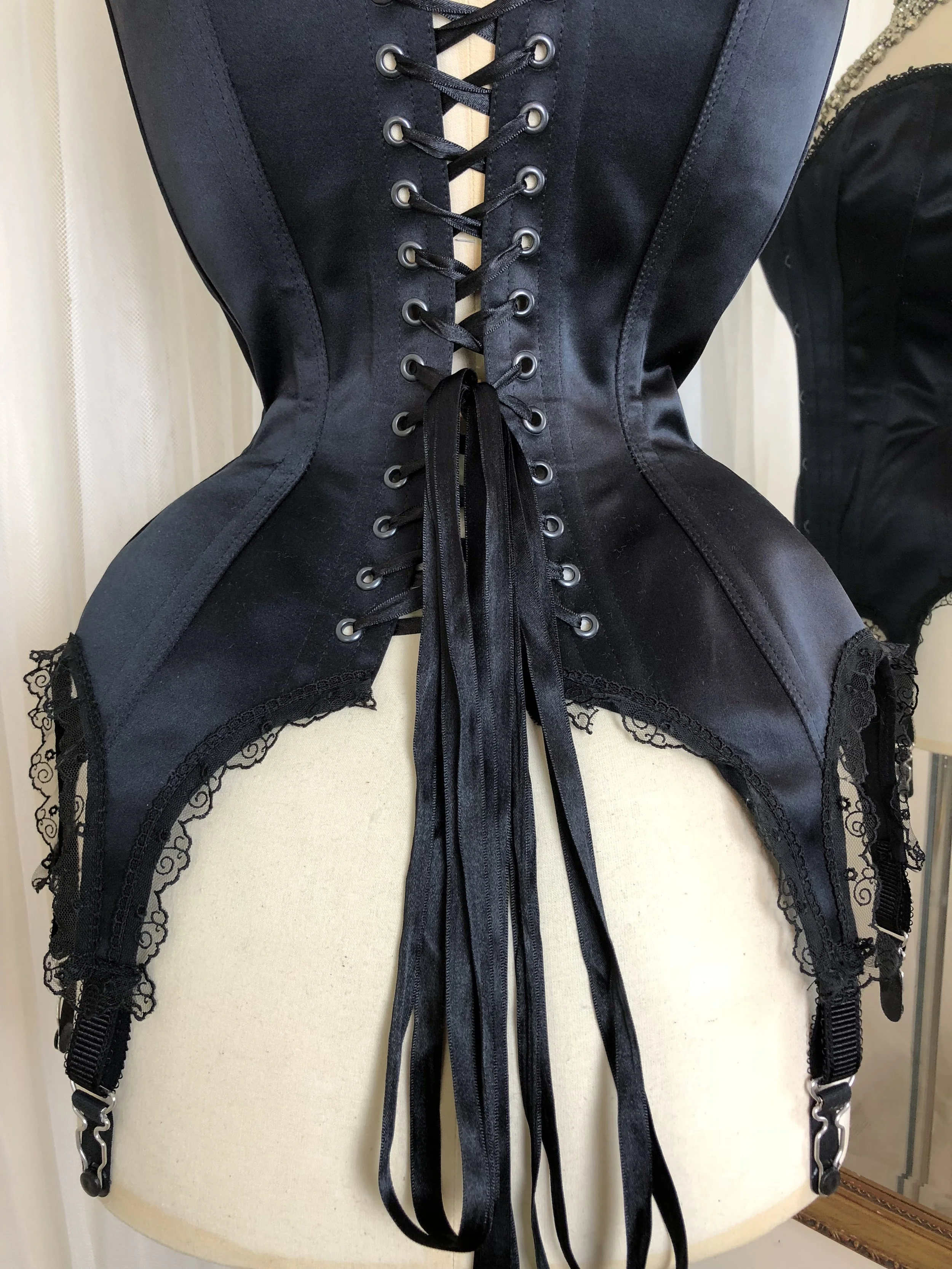
What is Waist Training in Corsetry
The discipline of training the waist by wearing corsets, in order to compress to an ever decreasing circumference.
Engineering a Corset for Waist Training
What I love about corsetry is engineering. You can have two corsets of EXACTLY the same measurements that look completely different - it's all to do with distribution. However, the smaller the waist (or the larger the rib/hip spring) the more difficult the engineering becomes. The standard reduction for dramatic modern corsetry is four inches. 5 inches can be achieved by those used to wearing a corset combined with the skill of the corsetiere, but any more than that, needs a bit more training for the average person.
The Mechanics of Waist Training in Corsetry
Your waist, in terms of corsetry, is the squishy bit underneath your rib cage, and above your hip bone - it's the same for men and women although skeletally placed a little differently and of course men and women 'squidge' differently because of their anatomy.
Women (AFAB) are in my experience, harder to engineer than men (AMAB) when it comes to tightlacing because they generally have more 'fat' in the lower abdomen than men who tend to be flatter in the pelvic area, due to the absence of a womb and female hormones. It's the desirable flatter tummy that's the difficult bit because as you compress your waist, the fat has to go somewhere. So when you are reducing your waist with a corset, you need to make sure that the corset supresses that aforementioned squishy bit at the waist, whilst leaving enough room for the ribs and the hips but at the same time, giving an elegant, balanced shape, and at the same time being comfortable. The bigger the waist reduction, the harder it is to achieve all those factors at the same time so that the wearer is comfortable and happy with the resulting shape. I have found with my tightlacing clients that more panels in the corset, distributes the waist reduction more evenly and therefore is more comfortable - in fact according to one (male) client, almost un-noticable in terms of comfort.
Body Modification, Fetish, or Both?
All corsetting is body modifcation. If your corset isn't modifying your body, it isn't a corset. Simple as that. The two things that define a corset for me are the busk at the front (whether split or closed) and the lacing at the back. The busk at the front keeps the front straight and rigid, the addition of an underbusk supports the spine, while the lacing at the back ensures that there is a gradual pressure applied to the torso which changes the shape of the body. The more support you have at the front and back of the corset, the more you can reduce the waist comfortably. Infact if you have these two items of construction correct, then you can tightlace even the most unseasoned of corset wearers - albeit very temporarily - hence you can sometimes see some extreme shapes on the runway. It therefore stands to reason that the full time waist trainer will be more comfortable.
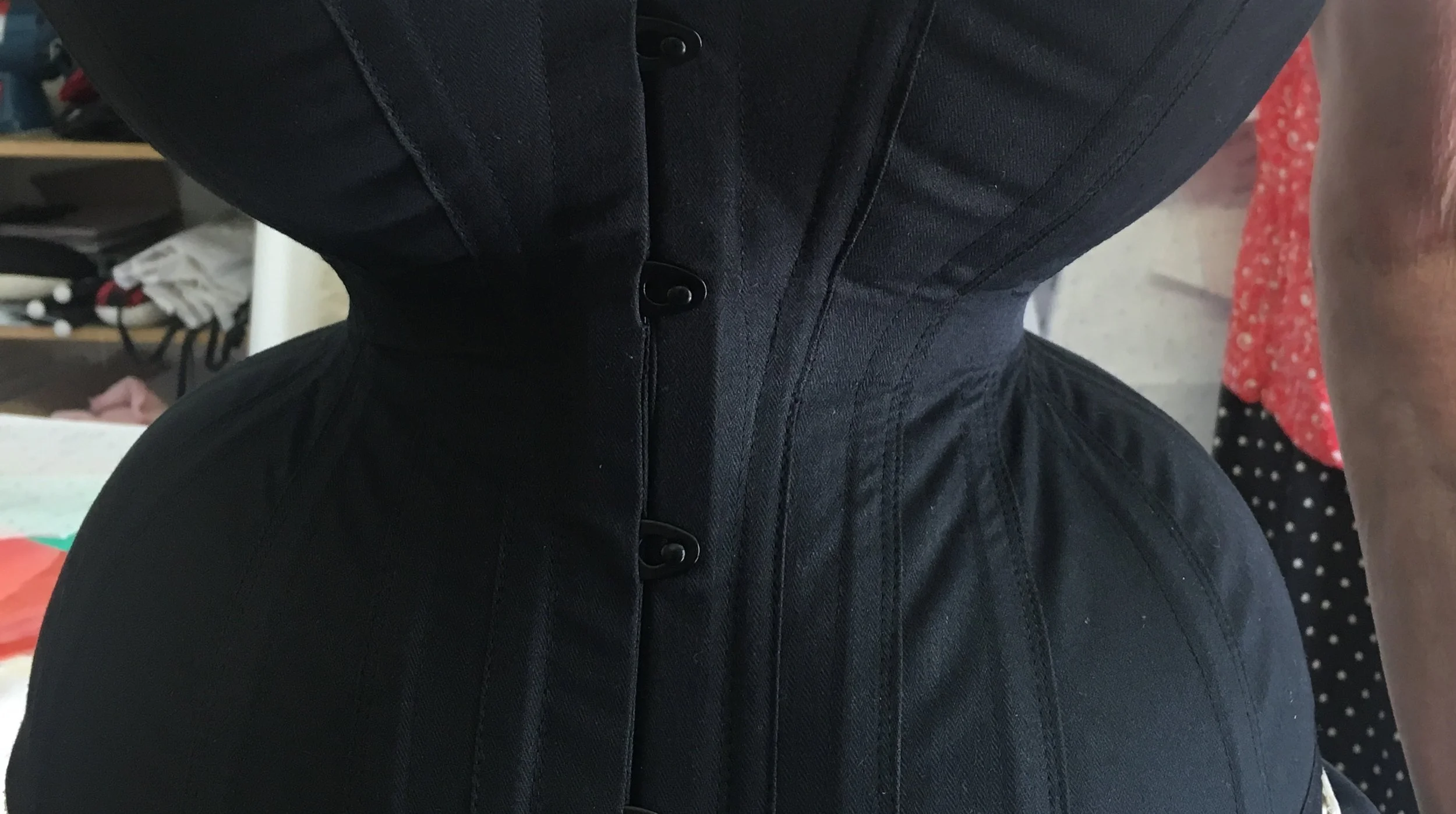
A male tightlacer at 22” with a natural waist of approximately 36”
As for fetish ... corsetry is 'addictive'. People who lace permanently do so because they like the feeling of being bound and when they get used to a certain level, they need to 'increase' that level from time to time. The same as any other addiction, we all have our limits, some more than others. And some start for other, more mundane reasons, and then become (happliy) dependant.
What Waist Training is Not
Waist training is not a diet. Nor is it permanent. Nor is it dangerous when done properly. Extreme waist trainers with large reductions find they cannot function without their corset which becomes an exoskeleten. It gives strength. However if they were to remove their corset it would not take long to go back to normal even though they may need to wear a tight belt during the transition.
Discipline and Purpose
Waist training properly with a corset is a discipline. There are certain levels and these also depend upon that gap between rib and hip that I mentioned in para 1. Neverhtless for the habitual tightlacer, the corset is worn almost 24/7 (not in the shower for instance but at all other times including in bed). My full time waist training clients do not change shape in the breif moments their corsets are removed during fittings. Other clients who can tightlace will revert to their normal shape as soon as they remove their corset.
Other Ways to Acheive a Dramatic Look with Corsets
A good corset, made by a skilled corsetiere will give an 'every day' dramatic shape - this can be acheived with a device I use called “flutes” which help to give the illusion of a smaller waist. Thus, a corset with flutes is a useful addition to the waist trainers wardrobe.
